Tuesday, August 30, 2011

Though I Walk Through the Valley


The Lord is my shepherd, I shall not want. He makes me lie down in green pastures; he leads me beside still waters; he restores my soul. He leads me in right paths for his name's sake.

Even though I walk through the valley of the shadow of death, I fear no evil; for you are with me; your rod and your staff - they comfort me.

You prepare a table before me in the presence of my enemies; you anoint my head with oil; my cup overflows. Surely goodness and mercy shall follow me all the days of my life, and I shall dwell in the house of the Lord my whole life long.

-Psalm 23

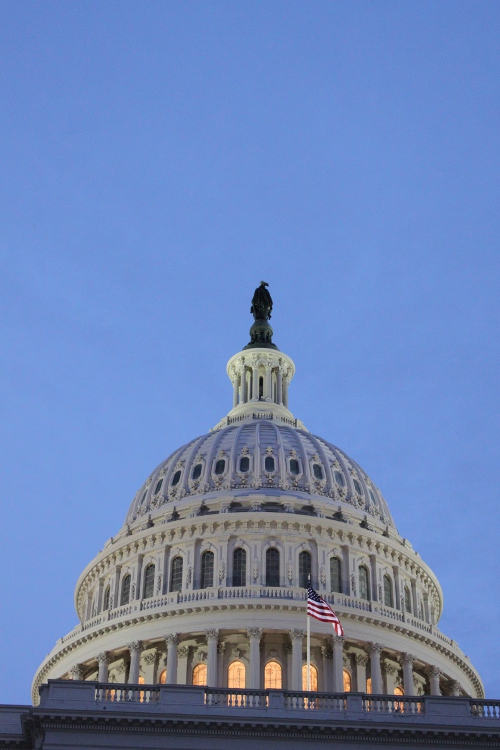
For those of us in Washington, DC, the earthquake last week revealed depths of anxiety that we had mostly avoided awareness of. The shock and surprise of the earthquake unveiled - if only for a moment - our denial of mortality. Under normal circumstances, we could go about our daily business; we could pursue our hopes and dreams with little thought for how this all must end. But the jolt of the earthquake - mistaken by so many of us for a terrorist attack - overwhelmed the anesthetic of routine and petty ambition. We were thrust into unknowing. For a brief moment, we were drawn into a story that was bigger than ourselves, a story in which we are not the protagonists, and not immortal.

I have a friend who works at a local market here on Capitol Hill. He describes the place as, "a 7-Eleven for yuppies." It is a convenience store with really good, really expensive food.

On the day of the earthquake, he told me that they were completely sold out. People were coming in and buying forty-dollar bottles of wine, little blocks of very expensive cheese, and other items fit for a celebration. That day, these men and women felt out of control. Forces beyond human jurisdiction were determining whether they survived or perished, whether the city they lived in stood or fell. They sensed that all of their plans, ambitions and money became absurd in the face of these forces - in the face of the reality of death.
It was eye-opening for me to hear my friend's story about the reaction of so many on Capitol Hill to the quake. This event forced us out of our comfort zones and into a very brief - yet very real - existential crisis. The tremors tore away the veil of the ordinary to reveal what we have built our lives on.

Given the reaction of the customers at the corner market that day, for many this revelation was traumatic. When our lives are built on career, consumerism and personal ambition, the encounter with death is a revelation of the absurd. We see the groundlessness of our lives, the lack of ultimate purpose for anything we do. If, in the end, the purpose of our lives is personal fulfillment, the reaction of shoppers on Capitol Hill makes perfect sense. In the face of meaninglessness and absurdity, we double down on our existential wager of hedonism. "Let us eat and drink, for tomorrow we die."(1)

For some of us, however, the earthquake revealed a different foundation. It is not that human life and the prospect of death made any more sense to us. Human beings are spiritual animals - but animals nonetheless. All things being equal, living creatures fear death and cling to life. Yet, in a moment when we were expecting imminent death, some of us discovered that we had an inward comfort. We turned inward, relying on the presence of God for guidance, and meaning. There was fear, but there was also a solid place where we could stand. There was a real and present Shepherd who was standing with us, even in the face of death.

This assurance - God's presence with us - transformed our response to crisis and the possibility of death. Rather than recoiling in terror from the absurdity of a meaningless life, we were empowered to respond in hope. We discovered that the Lord is indeed walking with us, even though we walk through the valley of the shadow of death. We sensed that we were a part of a Life bigger than ourselves. We knew that our lives, while precious, were not the end of the story.

Rather than fleeing the terror and absurdity of imminent oblivion, we prepared for transition. Knitted into God's life and power, we were able to experience the prospect of death not as the destruction of life and its meaning, but instead as the transition between one scene and another. The actors change, but the story continues to unfold. And God is in control.

For many years, I tried to make my own meaning without God. The outcome of that path was absurdity and despair. But what I experienced last week was not absurdity. Instead, as I faced what I believed was the real possibility of immediate death, I experienced a sense of purposefulness and quietness of spirit. I knew that God had placed me here for a reason. If I had to die there must be a purpose in that.

If I had made for myself the decision to live in Washington, I might have been angry that my plans had been thwarted and my life cut short. But I had not chosen to come here. I was directed here by God, and I felt a peace in knowing that if I died, I died to the Lord.(2)

I did not feel despair, because I sensed in the depths of my being that my Shepherd was walking with me and was guiding me according to his purposes. If that meant death, well, I would be frightened like any sheep would - but I knew I could trust in God's care. Death is something we all must face, but the Lord gives me purpose and comfort in life and in death. In this, I have experienced the meaning of the psalmist's words, "I shall dwell in the house of the Lord my whole life long."(3)

-

1. See 1 Corinthians 15:32
2. See Romans 14:7-8
3. Psalm 23:6

Friday, August 26, 2011

The Apocalypse of the Earthquake


When the earthquake struck Washington, DC, I was sitting at my desk on the fourth floor of the William Penn House. I had been working on that day's blog post, and I was concentrated, in the midst of editing.

At first, I did not consciously notice the tremors. Our house regularly vibrates from the passing city buses and other large vehicles. The quake soon captured my attention, however, as the light hum transformed into shaking, and then into a violent rattle. Objects began to fall off shelves, and I could feel the four-story building twisting and straining underneath me.

My first reaction upon becoming aware of this strange and terrifying motion was: "Oh, God. We're going to die." We do not expect earthquakes in Washington. What we do expect are terrorist attacks. Irrationally, my mind flew to the possibility of an atomic blast.(1) Was this how my life was going to end?

Not sure what was happening, but still assuming a terrorist attack that threatened to end my life and the lives of many of those I love, my next reaction was to turn my mind and heart to God in prayer. I breathed deeply, drawing my attention to the presence of God in my heart. I asked God, "Is this it?" I opened myself to God and sought to be ready to face death.

I wondered what it would be like to have the building topple over, to be crushed by a collapsed wall or ceiling. I wondered whether it was going to hurt, and for how long. I wondered what dying itself would be like. To my surprise, I did not feel particularly frightened of dying per se - though I must confess that I was not looking forward to the pain. By instinct, I clung to life and looked for a way to safety; but I also felt an inward sense of calm, coupled with a strange sense of wonder. "Could this really be it?"

All of these reactions took place over the span of about ten seconds. By the end of this time, I had realized that what we were almost certainly dealing with was an earthquake. I had experienced quakes before, both in Mexico and in Indiana, though neither of those had been of this magnitude. I did not really know how to react to an earthquake, so I did what we Kansans are taught to do in the event of a tornado: I moved to the center of the building and took care to avoid windows that could shatter and injure me.

A few seconds more, and I was making my way downstairs. The earthquake was subsiding, and I rushed to find my wife, Faith. She had taken very good care of herself without me. She had gotten out of the building immediately when she felt the quake, directing guests at the William Penn House to do the same.

About a minute after the trembling started, all I could think of was how grateful I was that everyone was alright. It was just an earthquake and - despite the damage to buildings around the city, and even some minor damage to the interior walls of our house - no one was injured. What a blessing! Compared with the kind of event that we had suspected at first, an earthquake sounded mighty fine.

Things here have gotten back to normal very quickly. The earthquake gives us something to talk about besides the weather and politics. The event is already fading into icon status - like the "snowpocalypse" of 2009 that shut things down in DC for days. It is a shared reference point for folks here, and many years from now, I am sure that we will still ask the question, "What were you doing when the earthquake hit?"

This is all well and good. We need memorable events to reminisce about and to give us something other than Capitol Hill politics to talk about. And yet, I feel that this experience was something more than just an anomalous seismic event. I feel that it revealed something profound about the nature of life here in the US capital.
In the Bible, the Greek word for "revelation" is apocalypsis. Revelation is a good translation for this word, because apocalypsis refers to the revealing of hidden realities - unmasking the hidden nature of the world we live in. In the apocalyptic Book of Revelation, God reveals the hidden realities of life in the Roman Empire. Caesar claimed to offer peace and security, but God reveals how human empire rests on greed, exploitation and violence. God's act of revelation - of apocalypse - is to reveal the deep truth that lies behind life as we know it.

I experienced the recent earthquake here in DC as an apocalyptic event. It literally shook me out of my ordinary consciousness and forced me to face an urgent question that is easy to ignore: "Am I ready to die?" Perhaps more importantly, it revealed the reality that life here in Washington is contingent. That is to say, we cannot take for granted that we will be here tomorrow.
The earthquake revealed our state of mind as residents of this city. Everyone I spoke with here said that their first thought during the earthquake was that we were expriencing a massive terrorist attack. The idea that this might have been an earthquake came only later, after more reasonable possibilities had been ruled out. This event was apocalyptic, in the sense that it revealed the deep fear of violence we in this city live under.

What does this mean for us, in practical terms? In the biblical tradition, of course, the purpose of apocalypse is not to destroy us. Instead, apocalypse gives us a chance to see things for how they really are and to change our way of living and thinking. I believe that the unprecidented seismic event we experienced this Tuesday provides us with just such a opportunity for change.

I pray that we will take heed of this revelation - this apocalypse of the earthquake. We have been provided with an opening to examine ourselves as a society. Now is the time to ask ourselves hard questions. Why do we live in such fear? Is it inevitable, or are there things we could do differently that would reduce this fear? Are we, the residents of Washington, DC, ready to die? What would we be dying for?

What are we living for?

-

1. It was irrational, of course, because there had been no flash; not to mention that the shockwave from a nuclear detonation would presumably have leveled Capitol Hill before I had time to reflect on it.

Tuesday, August 23, 2011

Radical Christian Community in the New Rome


"Our life is love, and peace, and tenderness; and bearing one with another, and forgiving one another, and not laying accusations one against another; but praying one for another, and helping one another up with a tender hand..." - Isaac Pennington, 1667

During my studies at Earlham School of Religion, I was part of an intentional Christian community called Renaissance House, located in an impoverished area of Richmond, Indiana. There were five of us living there: The house's founder, me, and three other men, each of whom had physical or mental disabilities. We had an open door policy, inviting folks from the neighborhood to stop by and visit with us. Three nights a week, we hosted community meals, inviting folks from the neighborhood, and our friends from around town, to come and have dinner together.

These dinners were an amazing demonstration of what Christ's table looks like. A normal Wednesday night dinner at Renaissance House included seminary students and professors, area businessmen, the homeless, the mentally ill and physically handicapped. It included the young and the old, the middle class and the poor.

I was deeply affected by my experience at Renaissance House. The depths of community at Renaissance House were profound. We experienced the good, the bad and the ugly of life in community. It was beautiful. We relied on one another, chopping wood, remodeling homes, serving food and gathering around the Scriptures as a little church of misfits and outcasts.

The heart of Renaissance House was our commitment to being radically available to one another. We were not primarily concerned with advancing our careers or "getting ahead" in the world. Our main focus was caring for one another, sharing the gospel and breaking bread together. We bore one another's burdens and spent hours together every day. We prayed together.

Not everything was ideal. Life at the Renaissance House was very challenging much of the time. We were living on the edge in many respects, and the community was so intense that we had to work constantly on our interpersonal relationships. This was not always easy, and there were some pretty spectacular blow-ups while I was there. Nevertheless, on balance, these challenges seemed healthy. Though we were often uncomfortable and struggled with our human weaknesses, it felt like we were growing together in the Lord.

I wonder increasingly whether this kind of community might be possible here in Washington, DC. There are a lot of challenges here that we did not face in Richmond, Indiana. The biggest of these is the sheer cost of living. Unlike in Richmond, where houses were available in the low 10,000s, the DC housing market is intense. Life in general is more expensive here. Even living on the margins requires a serious income. Is there room in DC for the kind of radical Christian community that I experienced at Renaissance House?

I feel certain that there is. After all, just decades after Jesus' death and resurrection, Paul was writing to an established church in Rome. Life must have been difficult for the Roman church, living in the capital city of the pagan empire that ruled almost the entire known world. They were surrounded by a society that worshipped imperial power and reveled in the luxury that the might of caesar provided.

The Church in Rome must have had a particular role to play in bearing witness to Jesus and his Upside-Down Empire - an empire of love and justice that stood in contrast to the selfishness and violence of the wider culture. I believe that there is need for such a witness today in the new Rome. In a city that is so weighted down by the narrative of domination, power struggles and abusive privilege, there is a need for an alternative story.

Here on Capitol Hill, we witness the ways in which the narrative of Empire is expressed in the feverish scramble for control and power over others. This anti-gospel is a tangible reality in the offices of the many organizations that seek to gain influence here. In the face of this very real darkness, there is need for another story to be told, embraced and lived out. It is the story of a little baby who is born in a back alley, the Savior of the world. It is the story of the Messiah, tortured and executed by the imperial authorities for challenging the narrative of privilege and domination. It is the story of a community that serves a Risen Lord and is led by the Holy Spirit - a Spirit that reveals the falsehood of human empires and invites us into a life of sacrificial love and siblinghood.

I believe that there is a call for such communities here in Washington, DC. Despite the challenges that we face as residents in a wealthy center of imperial power, God is calling us to set aside our fear and our need for control. God is inviting us to live as the Body of Christ, not in a metaphorical sense, nor in a merely "spiritual" sense, but concretely. We are called into life together as a community, a life of mutual care and shared suffering for the Truth.

Surrender to Jesus in community will come in small, practical ways. We may be asked to surrender habits that upset our brothers and sisters. We may be asked to forgo career advancement that conflicts with the needs and mission of the community. We will most certainly be asked to give up some of the mobility that our present society so highly prizes.

During my time at Renaissance House, I learned that true Christian community is not a theoretical question. We can have all the right ideas about God and still fail to step out in faith. The Body of Christ only becomes a reality when we are willing to surrender control and live in community guided by the living presence of Jesus.

Are we willing to let go and become a part of something greater? Are ready for a life more grounded in community? It will be hard to let go of the individual freedom that the wider culture so cherishes. But the reward that we are promised is so much greater - the abundant life that we receive as we live into God's purpose for us.