I recently had a conversation with an experienced pastor about his struggles in ministry. He lamented that he did not feel clear to retire, though he would soon be old enough. As much as he might like to relinquish his duties as pastor, he did not see many young men and women being called to the pastorate. If he were to retire now, he explained, it did not seem likely that there would be anyone to take over. What was going wrong in the Church, he wondered, that new leadership was not emerging?
My initial reaction to this pastor's woes was to suggest that he get out of the way. I know for a fact that there are many young women and men today who are being called into ministry, and if they are not coming forth as leaders in his congregation, perhaps he should step down as pastor to make room for new leadership to emerge.
As I reflected more deeply on this pastor's predicament, however, I realized that nurturing new leadership in his church would take a lot more than him simply standing aside and making way for the next generation. In fact, if he were to do that, it would probably devastate his congregation, which certainly relies on him for guidance, pastoral care, and spiritual support. The more I considered it, the more convinced I became that this pastor - and the thousands of church leaders across North America who face similar situations - did well to continue on in his service. The church needs him. That being said, there is still a lot of thinking to do about what it might look like for him and others to serve in such a way that nurtures and makes space for the next wave of leadership in the local church.
We as the Church are dealing with issues that can only be reckoned with when we recognize that we are living in a unique, transitional time; we must also realize the importance of honoring generational differences as we pass through this transition. Based on my own experience, I would venture to say that most of the men and women serving in leadership today in mainline Protestant and Quaker congregations are Boomers, as well as some from the World War II generation. When this pastor expressed his discouragement that the "next generation" was not emerging to take up service to the Church, I assumed he was referring to Generation X (born 1965-1979), and Millenials (born 1980-1995[?]).
While there are many in my generation who are being called to dedicate their lives to God's service, many Millenials who are called to the ministry are called to forms of ministry that the older generations do not easily recognize. Our ministry often takes place in diverse networks, rather than in a strictly congregational context; we tend to see the Church as being a web of relationships in Christ, rather than fixed membership in a particular congregation. This makes things complicated when the generations seek to collaborate in ministry.
For their part, Boomers and World War II generation Christians have largely seen ministry as being by definition in the model of the traditional pastorate, and many of them are distressed that so few young people are emerging to carry on the model of full-time, released pastoral ministry in this new generation. And their distress is based in reality; while I know a number of excellent Generation-X and Millenial pastors in traditional settings, there simply aren't enough to serve all of our churches.
Within my own tradition, the Religious Society of Friends, churches are laying themselves down left and right; with low numbers, elderly membership and little appetite for questioning the status quo, there is not much hope for these traditional congregations. Most younger Christians aren't attending those dying churches, much less providing leadership. For many Xer and Millenial Christians, the older model does not compute with our way of life and experience of how God works in our culture.
Despite the desire on the part of many in the older generations to see a robust pastoral system along the lines of the traditional Protestant model, the nature of ministry is in flux in our context of early 21st century post-Christendom. The old-school pastoral model feels increasingly irrelevant for many in the post-modern generations. Many of us are not only not attracted to the pastorate - we are repelled by the labyrinthine committee structures and institutional jargon of our denominations. We feel a disconnect with the 20th-century structures of the modern Church because we intuitively sense that it fails to speak to the needs of many in the post-modern generations, no matter how much it still speaks to folks of the WWII-era and Boomer generations.
In my generation there seems to be a marked shift toward placing an emphasis on what Protestants would call "lay ministry" - that is, the model that the early Quakers advocated. While most of the history of Christianity has been dominated by the hierarchical structures of Christendom (the Church's marriage to Empire from Constantine until present), both the early Friends and many Gen-X and Millenial Christians today are experimenting with ways of "being church" that don't involve top-down institutionalism - whether in the form of priestly hierarchies or life-draining committee structures.
These emerging models are characterized by networks, local empowerment and free gospel ministry, without the need for a formal hierarchy among members of the Church. Everyone is called to share freely the gifts that God has given them to build up the Church. While different ones of us have different callings and gifts, we share together what we have, so that the Body of Christ might be strengthened and the Gospel proclaimed through our lives.
Many emerging (or converging) churches today are experimenting with a way of life together that does not require a paid pastor. For instance, I have visited a church in Indiana where the worship service consists of a shared meal followed by praise music and a period of waiting on the Risen Lord in silence, out of which spoken ministry is often given under the direct guidance of the Holy Spirit. Until recently, various members of the church - including children - had given prepared sermons, as well, but in the last few months they have not felt led to prepare messages ahead of time. They simply gather together, share a meal, sing songs of praise, and wait on the Lord himself to lead them. This is quite different from the traditional Protestant pastoral model, but well within the norms of what we know of from the early Church.
There are more and more churches springing up across North America that are being led to operate in these new, yet ancient, ways. They are emerging in rural areas and in dense population centers, among the privileged middle class and among the poor. These churches are drawing some who have long been involved with institutional church structures, as well as others who are coming to Christ for the first time in this new format. The Holy Spirit is at work, drawing an unlikely assortment of people together to follow after Jesus and become his disciples.
This is not to say that these new churches have completely broken with the older model - or with the older generations. In the cases that I am familiar with, the leaders of these churches tend to have strong relationships with the more traditional congregations where they came to be Christians, often still serving in leadership roles in WWII and Boomer generation churches while at the same time tending the flames of a new movement among Gen-Xers and Millennials. The overall pattern that I have observed is one of organic transition, not hasty revolution.
It has become clear to me in my experience of this emerging movement of post-modern churches that the younger generations of ministers are quite willing to work side-by-side with their older colleagues. The defiant rebellion for which the Boomers were so famous does not seem to be present among most Gen-Xers or Millenials. The fact that the rising generations have different worldviews and needs than their predecessors should not prevent us from collaborating and supporting one another; it should not even mean we need to split organizationally. However, in order to walk together faithfully as the Church, all living generations will need to learn how to encourage one another in our strengths and be intentional about bearing one another up where we are weak.
What might this look like, practically speaking? To begin with, Boomers in particular will have to humble themselves. I cannot imagine anything more humbling than to recognize that my own model of ministry - the way that God has worked in my life- is not eternal or universal. God provides each generation with the tools and forms that it needs to preach the Gospel to the people in that social and cultural context. Whatever God called us to in the 20th century, the 21st century is going to look a lot different.
That being said, if the Boomers are willing to humble themselves before the Lord, he will lift them up and use them to counsel and equip a new generation of leaders. Many of these new ministers will bear little outward resemblance to their predecessors. Many of them will never be pastors, in the traditional sense. But, if Boomer pastors and other Boomer church leaders are able to accept the shift in ministry style and church structure that is taking place in this new century, they will be in a position to support the transmission of the Gospel message to a new generation of Christians.
To accomplish this, there is no reason for most Boomer pastors to stop being pastors. It is merely a question of shifting the priorities of the pastorate. While before, perhaps, the emphasis had been on maintaining old institutions, the focus needs to shift to nurturing, discipling, and empowering emerging leaders. And here is the greatest challenge and the most exciting promise: These daring Boomer leaders will be creating space for a totally new thing to spring forth in their churches and denominations.
These new leaders won't look like the old ones - won't think like them, won't operate like them. But they will serve the same Lord, and they will be united in bonds of mutual love and affection with the older leaders who have mentored them and released them for ministry. As these new ministers adapt to meet the needs of the younger generations, they will maintain the unity of the Church, because their organic, spiritual and relational unity with the previous generations in the Church will never be in question.
Similar humility and intergenerational cooperation will be required of older Christians who presently dominate most local church and denominational institutions. Time and again, I hear the lament come up from the extensive committee structures of the Quaker world: "We don't have any young people!" And they don't. Xers are practically invisible, and Millenials are generally token participants in institutional affairs.
It is time that the WWII and Boomer generations in church leadership seriously consider whether their committees and institutions are truly relevant to those who have come after them. In many cases, they are not. In some cases, this will probably mean that committees, structures and organizations need to be laid down entirely. But this will not be the case across the board. Certainly, many of our committees and institutions have not entirely outlived their usefulness; but their focus may need to shift.
Just as in the case of pastoral ministers, the committees and institutional leaders of our churches and denominations will need to change their priorities from maintaining the status quo to nurturing and creating space for the growth of the new thing that God is doing in the emerging generations. This will mean big changes, and it will mean releasing control of cherished programs and institutions, giving younger Christians a real, adult share in leadership. It will be hard, and even painful; times of transition always are. But it will result in the empowerment of muted voices in the Church and allow Christ to work through us to share his love with all generations.
So far, it sounds like folks in the WWII and Boomer generations are being asked to make all the sacrifices. And it's true: Greater responsibility does fall on those who have decades more experience and grounding in the faith, and in the institutions of the Church. But we must also ask hard things of our rising Gen-X and Millenial leaders. As tempting as it might be for inexperienced young Christians to leave behind all of the drama of the Church, we as emerging leaders must accept our role as agents of transformation within the existing Church. We cannot claim to love our older brothers and sisters in Christ if we refuse to labor patiently alongside them, even when we are frustrated by the painfully slow pace of change in our churches and denominations.
This does not mean that we should not push for change. It certainly does not mean that we should avoid innovative and unexpected ministry that God calls us to. On the contrary, the road we are to walk will be filled with challenges. The fact is, God very often calls us into conflict with our brothers and sisters in the Church. This is how God breaks us open and humbles us so that we are ready to do Christ's work. Because it is scary when God does a new thing, we should expect resistence, even from other Christians. But we as Gen-X and Millenial leaders in the Church have a responsibility to submit ourselves to the Church. This means waiting and demonstrating patience as we struggle through the hard places. This means not running away when issues arise that frighten or anger us. Submission to the Church means embracing conflict, seeing it as an opportunity for growth rather than a danger to be fled from.
While WWII-era and Boomer Christians will often feel stretched by how much we Xers and Millenials want to change the Church's way of doing things, we younger folk are bound to feel stifled by the inertia and reluctance to shift gears on the part of our older brothers and sisters. To be frank: We need to suck it up. The Church of Jesus Christ has been in existence for two thousand years, and the Church is by necessity quite conservative. We as the Body of Christ have a responsibility to hold on to what we know is true and weigh innovation carefully. As younger Christians, we need to get used to the idea that change takes time; and we should repay the mentoring, support and nurture that we receive from older Church leaders with a certain amount of forbearance in the face of resistance to change.
While WWII and Boomer generation church leaders and pastors nurture emerging leaders and make space for new and innovative forms of ministry and church life, rising leaders of the Gen-X and Millenial generations must take care to honor the experience and tradition that is held by the older generations. This will mean holding tension and dealing with outright conflict. We do well to thank God when conflict comes to the surface, because it is through the healthy expression of conflict that we as the Church are given opportunity to confess our sins to one another and be brought together in Christ as we recognize our desperate need for him as a people. When we realize that we do not have all the answers ourselves, we are given the chance to humble ourselves at Jesus' feet, receiving his guidance together.
To be able to move forward in unity, we need to find how Christ is leading us to walk together, caring for all generations of Christians in our fellowships, and to reach out to those who have not yet found the joy and peace that is in Christ Jesus. There is a great people to be gathered in this generation, and God wants to use us to bring in the harvest. But we must first be transformed as a Church. Neither rigid adherence to the church folkways of the past century, nor a complete break with tradition will prepare us for the work that God has in store for us. Only by listening together for how God wants to use the gifts of the whole Church, and by being faithful in upholding one another in those gifts, can we faithfully proclaim the Gospel of Jesus Christ across the generations.
Thursday, September 09, 2010

Thursday, August 19, 2010
Micah's Ministry Newsletter #22 - Quaker Youth Pilgrimage 2010
Dear Friends,
I survived.
With God's help, and grateful for all the prayers that have been sent my direction, I have emerged from a full month with twenty-eight high-school-aged young Friends and three other adult leaders with mind, body an d spirit mostly intact.
Overall, my experience with the Quaker Youth Pilgrimage was a very positive one. Despite my anxiety going i n, I was pleased by the tight-knit community that came together over the course of the month, both among the pilgrims and within the leadership team. The other adult leaders impressed me with their dedication and professionalism, and I was often struck with a sense that God had planned the composition of our team. We had a good mix of gifts and background between the four of us, and I think that the Pilgrimage would have been a far less rich experience for everyone involved had any of us been absent.
The Pilgrimage took us all over Oregon and Washington state. The first major phase of our journey was a week spent at Quaker Cove camp, near Anacortes, Washington. It was helpful for us to have this week together without the interruption of moving around. During this time, our community was able to gel to a great degree, the pilgrim committees and business process got off the ground, and we got into a daily rhthym of worship, meals, play,
  service and learning. It was a really key time for us as leaders, too, since we really did not know what we were doing and needed to spend large amounts of time meeting together and figuring out how we were going to make the next day - much less the next week - come together.
We more or less had our act together by the time we made our way back down south to stay at North Seattle Friends Church's meetinghouse. During our time in Seattle, we continued to grow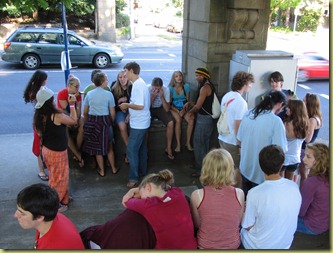 more bonded as a group, and as a sense of safety in community emerged, we were able to go deeper with one another spiritually. A key moment for the group was a worship-sharing session where we considered the question "What is holding you back?" This opened a time of raw sharing and mutual vulnerability, which I believe enhanced our ability to go deeper as a group.
Throughout the month, the pilgrims experimented with a wide variety of worship styles, ranging from fully unprogrammed, to semi-programmed and programmed. I was impressed with the way that pilgrims with no background with pastoral Friends stepped forward to lead programmed worship services, deliver sermons and offer vocal prayer on a daily basis. This was especially remarkable given the composition of the pilgrims, all but one of whom came from an unprogrammed background.
Pilgrims and leaders together struggled with the fact that this pilgrimage was not representative of Friends from the Americas and Europe and Middle East sections. With a solid majority of the pilgrims self-identifying as "non-theist," the relatively liberal Northwest Yearly Meeting churches that we visited stretched us with their explicitly Christian basis and self-understandings. I was impressed with how the pilgrims stepped up to this challenge and really engaged with the rest of the Quaker family tree, even while they themselves were fairly homogenous as a group.
Our next stop was Portland, where we stayed in Multnomah Friends' meetinghouse. We had a great time visiting area Friends Meetings, both Liberal and Evangelical, as well as exploring Portland's downtown. I had a lot of fun when the American Friends Service Committee visited us and brought a hip-hop team with them who gave us a lesson in breakdancing. During our time in Portland, we took a trip to Newberg, where we got a tour of George Fox University, visited Northwest Yearly Meeting's offices, and had dinner with some area Friends.
One of the most amazing moments of the entire Pilgrimage for me happened during our visit to Newberg. We were having dinner at Newberg Friends' meetinghouse, and I was talking with my grandmother who is a member there. Since before the Pilgrimage began, I had been concerned that all of the pilgrims get a copy of the Scriptures, and this concern had only grown as our time together went on. So, I asked Nana whether she knew where we could get Bibles for everyone. She checked with Greg Lamm, pastor of 2nd Street Community Church - himself a former leader of the QYP - and he informed me that he had a friend whose ministry it was to collect used Bibles and distribute them to folks around the world who desired to have a copy of the Scriptures.
Within an hour, we were on the road in our big yellow school bus (thanks, Reedwood!) over to this friend's house. The man literally had a used Bible warehouse in his backyard, and after explaining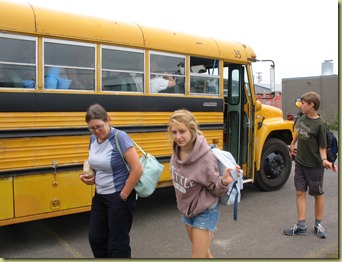 his ministry to us, he let us into the storehouse to rifle through everything he had, picking out the Bibles that appealed to us. It was such a joy watching the pilgrims get excited about having their very own copy of the Scriptures! Many of them got more than one copy (usually because they wanted a copy of the King James version, but I encouraged them to get a more accessible translation, as well). I was so grateful to God for the way God answered my prayers and placed these servants of the Lord in our path.
With the help of these Bibles, some of the pilgrims and I were able to spend several sessions together looking at what Jesus actually taught and learning the basics of how to navigate the Scriptures. For those who participated, it was a valuable time of connecting with our Christian heritage as Friends. Many of the pilgrims felt better able to make sense of the origin of Friends testimonies after having the chance to take a brief look at the texts that inspired the early Quakers, and I am hopeful that many of the pilgrims might continue their exploration upon returning home, not letting their new Bibles gather dust.
Our next stop was Camp Magruder, a Methodist summer camp on Twin Rocks beach. On our way out to the Oregon coast, we were
 able to stop at Freedom Friends Church. It was a good chance to let the pilgrims see an Evangelical church that is, as they put it, "passionately Christ-centered and passionately inclusive." With one of the main dividing lines between Liberal and Evangelical often being homosexuality, it was helpful to visit a church that was spanning that gap, embracing people regardless of their sexual orientation or identity, but also standing firm in their Christian faith. Most of the pilgrims thought this was pretty cool, too.
Our time at Camp Magruder was good. Apart from mealtimes - which were hideously noisy, crowded and rushed - Camp Magruder was really great location for us to spend the first part our last week together. We got to spend a lot of time soaking up the beauty of the Oregon coast; we even held a time for worship, reflection and journaling on the beach. In many ways, it felt like the beginning of the end for us as a pilgrimage. We began to shift towards concluding our experience together.
After our time on the coast, we stayed briefly with Camas Friends Church, near Portland. I felt blessed to be able to spend a little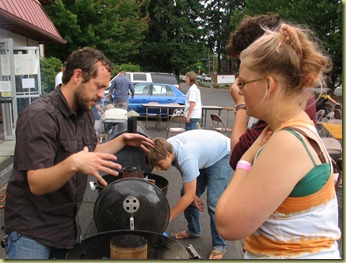 time catching up with pastor Wess Daniels, and we were all glad to be able to attend Sunday morning worship with Friends in Camas. Our time with Friends in Camas was brief, and soon we moved on to Anderson Lodge, our last stop on the Pilgrimage.
Anderson Lodge was beautiful - a wonderful location to conclude the Pilgrimage. I think just about everyone met the end of the Pilgrimage with a bittersweet combination of sadness and relief.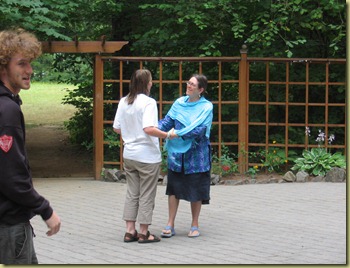 We were saddened to leave the tight-knit community that had developed over the course of the month - and for many of the pilgrims this was the first time that they had experienced any kind of community with other young Quakers. At the same time, we were weary from a full month of living with almost three dozen other people 24/7, and many of us were missing our families, loved ones and spouses.
By the time I finally arrived back in DC on August 17th, I had been away from my wife Faith for almost a month and a half. I felt very grateful to finally be home again. Even so, I must admit that there were moments on my trans-continental train ride that I teared up thinking about the pilgrims and what we had shared together. I carry these young Friends in my heart, and I pray that God will continue to care for them and help them to grow in their faith and walk with God.
I have nothing but gratitude for the time I have spent as a leader for the 2010 Quaker Youth Pilgrimage. My sense of leading to serve was confirmed time and time again along the way, and I thank God for placing me exactly where I needed to be. I love how God surprises me.
Yours in the peace and mercy of Jesus Christ,
Micah Bales
I survived.
With God's help, and grateful for all the prayers that have been sent my direction, I have emerged from a full month with twenty-eight high-school-aged young Friends and three other adult leaders with mind, body an d spirit mostly intact.
Overall, my experience with the Quaker Youth Pilgrimage was a very positive one. Despite my anxiety going i n, I was pleased by the tight-knit community that came together over the course of the
 month, both among the pilgrims and within the leadership team. The other adult leaders impressed me with their dedication and professionalism, and I was often struck with a sense that God had planned the composition of our team. We had a good mix of gifts and background between the four of us, and I think that the Pilgrimage would have been a far less rich experience for everyone involved had any of us been absent.
 The Pilgrimage took us all over Oregon and Washington state. The first major phase of our journey was a week spent at Quaker Cove
 camp, near Anacortes, Washington. It was helpful for us to have this week together without the interruption of moving around. During this time, our community was able to gel to a great degree, the pilgrim committees and business process got off the ground, and we got into a daily rhthym of worship, meals, play,
  service and learning. It was a really key time for us as leaders, too, since we really did not know what we were doing and needed to spend large amounts of time meeting together and figuring out how we were going to make the next day - much less the next week - come together.
 We more or less had our act together by the time we made our way back down south to stay at North Seattle Friends Church's meetinghouse. During our time in Seattle, we continued to grow
 more bonded as a group, and as a sense of safety in community emerged, we were able to go deeper with one another spiritually. A key moment for the group was a worship-sharing session where we considered the question "What is holding you back?" This opened a time of raw sharing and mutual vulnerability, which I believe enhanced our ability to go deeper as a group.
Throughout the month, the pilgrims experimented with a wide variety of worship styles, ranging from fully unprogrammed, to semi-programmed and programmed. I was impressed with the way that pilgrims with no background with pastoral Friends stepped forward to lead programmed worship services, deliver sermons and offer vocal prayer on a daily basis. This was especially
 remarkable given the composition of the pilgrims, all but one of whom came from an unprogrammed background.
Pilgrims and leaders together struggled with the fact that this pilgrimage was not representative of Friends from the Americas and Europe and Middle East sections. With a solid majority of the pilgrims self-identifying as "non-theist," the relatively liberal Northwest Yearly Meeting churches that we visited stretched us with their explicitly Christian basis and self-understandings. I was impressed with how the pilgrims stepped up to this challenge and really engaged with the rest of the Quaker family tree, even while they themselves were fairly homogenous as a group.
Our next stop was Portland, where we stayed in Multnomah Friends' meetinghouse. We had a great time visiting area Friends Meetings, both Liberal and Evangelical, as well as exploring Portland's downtown. I had a lot of fun when the American
 Friends Service Committee visited us and brought a hip-hop team with them who gave us a lesson in breakdancing. During our time in Portland, we took a trip to Newberg, where we got a tour of George Fox University, visited Northwest Yearly Meeting's offices, and had dinner with some area Friends.
 One of the most amazing moments of the entire Pilgrimage for me happened during our visit to Newberg. We were having dinner at Newberg Friends' meetinghouse, and I was talking with my
 grandmother who is a member there. Since before the Pilgrimage began, I had been concerned that all of the pilgrims get a copy of the Scriptures, and this concern had only grown as our time together went on. So, I asked Nana whether she knew where we could get Bibles for everyone. She checked with Greg Lamm, pastor of 2nd Street Community Church - himself a former leader of the QYP - and he informed me that he had a friend whose ministry it was to collect used Bibles and distribute them to folks around the world who desired to have a copy of the Scriptures.
 Within an hour, we were on the road in our big yellow school bus (thanks, Reedwood!) over to this friend's house. The man literally had a used Bible warehouse in his backyard, and after explaining
 his ministry to us, he let us into the storehouse to rifle through everything he had, picking out the Bibles that appealed to us. It was such a joy watching the pilgrims get excited about having their very own copy of the Scriptures! Many of them got more than one copy (usually because they wanted a copy of the King James version, but I encouraged them to get a more accessible translation, as well). I was so grateful to God for the way God answered my prayers and placed these servants of the Lord in our path.
 With the help of these Bibles, some of the pilgrims and I were able to spend several sessions together looking at what Jesus actually taught and learning the basics of how to navigate the Scriptures.
 For those who participated, it was a valuable time of connecting with our Christian heritage as Friends. Many of the pilgrims felt better able to make sense of the origin of Friends testimonies after having the chance to take a brief look at the texts that inspired the early Quakers, and I am hopeful that many of the pilgrims might continue their exploration upon returning home, not letting their new Bibles gather dust.
Our next stop was Camp Magruder, a Methodist summer camp on Twin Rocks beach. On our way out to the Oregon coast, we were
 able to stop at Freedom Friends Church. It was a good chance to let the pilgrims see an Evangelical church that is, as they put it, "passionately Christ-centered and passionately inclusive." With one of the main dividing lines between Liberal and Evangelical often being homosexuality, it was helpful to visit a church that was spanning that gap, embracing people regardless of their sexual orientation or identity, but also standing firm in their Christian faith. Most of the pilgrims thought this was pretty cool, too.
 Our time at Camp Magruder was good. Apart from mealtimes - which were hideously noisy, crowded and rushed - Camp
 Magruder was really great location for us to spend the first part our last week together. We got to spend a lot of time soaking up the beauty of the Oregon coast; we even held a time for worship, reflection and journaling on the beach. In many ways, it felt like the beginning of the end for us as a pilgrimage. We began to shift towards concluding our experience together.
 After our time on the coast, we stayed briefly with Camas Friends Church, near Portland. I felt blessed to be able to spend a little
 time catching up with pastor Wess Daniels, and we were all glad to be able to attend Sunday morning worship with Friends in Camas. Our time with Friends in Camas was brief, and soon we moved on to Anderson Lodge, our last stop on the Pilgrimage.
 Anderson Lodge was beautiful - a wonderful location to conclude the Pilgrimage. I think just about everyone met the end of the Pilgrimage with a bittersweet combination of sadness and relief.
 We were saddened to leave the tight-knit community that had developed over the course of the month - and for many of the pilgrims this was the first time that they had experienced any kind of community with other young Quakers. At the same time, we were weary from a full month of living with almost three dozen other people 24/7, and many of us were missing our families, loved ones and spouses.
 By the time I finally arrived back in DC on August 17th, I had been away from my wife Faith for almost a month and a half. I felt very grateful to finally be home again.
 Even so, I must admit that there were moments on my trans-continental train ride that I teared up thinking about the pilgrims and what we had shared together. I carry these young Friends in my heart, and I pray that God will continue to care for them and help them to grow in their faith and walk with God.
 I have nothing but gratitude for the time I have spent as a leader for the 2010 Quaker Youth Pilgrimage. My sense of leading to serve was confirmed time and time again along the way, and I thank God for placing me exactly where I needed to be. I love how God surprises me.
Yours in the peace and mercy of Jesus Christ,
Micah Bales
Friday, August 13, 2010
Quaker Youth Pilgrimage 2010 Epistle
2010 Quaker Youth Pilgrimage
To Friends Everywhere:
Thirty-two pilgrims
From Friends to friends we became
With these words we part
Fall 2009
An image of QYP begins to formulate, as fuzzy as it is, with twenty-eight youth and four adults sending in applications that will, over time, be reviewed and accepted. These thirty-two pilgrims are to gather together for a month in the summer of 2010, exploring Quakerism while journeying through parts of the Pacific Northwest. What brought us individuals together was our titles as Friends, and yet we were worlds apart in our definitions of Quakerism, as well as our expectations of what this pilgrimage would bring:
"I think QYP will give me a better idea of what all Quakers have in common, because I wonder 'what makes a Quaker?”- Emmie Touwen
“Through sharing and learning about other people and their way of life I feel I will gain something no other experience will allow me to gain.”- Simon Rolph
Of course, the time between applications and the beginning of our trip allowed our expectations and levels of preparation to develop, in some cases dramatically. Nevertheless, we universally entered this journey with less than concrete ideas of what was to come.
Perhaps the most significant factor to set QYP apart from any other experience, Quaker or otherwise, is the sense of immersion which comes from living in a close-knit and, in many respects, isolated community for as long as we have. Our use of music as well as our introduction to compassionate listening added strength to the foundation of our connection.
However, so strong a sense of community takes time and effort to build, mistakes are made, allowing for knowledge to be gained. Structuring and organizing our community was a particular challenge, as we were not all accustomed to Quaker business practice, and (naturally for an international group) there was variation in the practices with which we were familiar.
Exposure is unavoidable, both in terms of how well we have gotten to know each other and how honest we are forced to be with ourselves. With a lack of privacy, we could not hide our true traits and emotions from others; we were stripped bare and left vulnerable. We were forced to examine ourselves both socially and spiritually and, immersed in our secure environment, allowed to address our faults and develop as individuals. Our identity as Quakers was frequently called into question, both through intimate discussion as well as whole-group activities deliberately formulated for self-exploration. For some people even calling themselves Quakers became discomforting when faced with the spectrum of belief which exists within the Religious Society of Friends. Since the majority of our group were previously unexposed to Programmed and Evangelical Friends, such experiences caught us off guard and again challenged our ideas on what unites us as Quakers.
Through some of these foreign experiences, we were forced to realize how limited our own knowledge of Quakerism was, and thus educating ourselves became an integral part of our shared experience. Among these, we gained a new idea of hospitality. We were the cause of genuine excitement not only in Quaker Churches, but also in the homes of Seattle, Portland, and Camas Friends. Contrary to our fears, Friends across branches were willing to hear our voices and our beliefs, not with the intention to convert but with the intention to listen with love. This in particular is among the most significant lessons we hope to bring home. Many of us also leave having unearthed an unanticipated respect for the teachings of the Bible and their relationship to the core values of Quakerism. Our growth and exploration throughout the pilgrimage also highlighted many difficulties. These included exploring the differences in our faith with other pilgrims and the limited time for exploring our spirituality as a group. This has left many of us with a desire to maintain and extend this interest beyond QYP.
As a gathered youth, we are empowered to speak of one final, lasting concern. Throughout the pilgrimage we were reminded of the saddening truth that we are not a complete gathering of Friends. We will not be a complete gathering until there is a fair representation of all sections of the Religious Society of Friends. In this pilgrimage there was only one youth from a pastoral background. Overall, there were four Friends—out of the thirty-two total—that consider themselves evangelical or conservative Friends. For those members of the community, it was difficult at times to feel safe in expressing their beliefs. With this in mind, we as Quakers call for a greater commitment to improving the diversity of this pilgrimage. While we cannot deny the power of the Spirit's presence in the group, it is important to realize that a greater learning experience could have been achieved from a more representative community.
August 2010
Our journey has finally reached its end; as a community we are readying to leave. We have written our words of reflection, hoping that those outside of the community will not only understand the essence of this pilgrimage but also that those within will be able to look back at this with the willingness to return to being vulnerable and honest, even in the presence of conflict.
“In the past, I couldn't bring Quakerism home with me. It was a week every year and then a couple of weekends when I could be a Quaker. Now I'm going to be a Quaker all of the time” - Mason George
“This trip has taught me that it's our actions that make us Quaker just as much as our beliefs. I definitely have more drive to 'put faith into action'” - Naomi Garnault
To Friends Everywhere:
Thirty-two pilgrims
From Friends to friends we became
With these words we part
Fall 2009
An image of QYP begins to formulate, as fuzzy as it is, with twenty-eight youth and four adults sending in applications that will, over time, be reviewed and accepted. These thirty-two pilgrims are to gather together for a month in the summer of 2010, exploring Quakerism while journeying through parts of the Pacific Northwest. What brought us individuals together was our titles as Friends, and yet we were worlds apart in our definitions of Quakerism, as well as our expectations of what this pilgrimage would bring:
"I think QYP will give me a better idea of what all Quakers have in common, because I wonder 'what makes a Quaker?”- Emmie Touwen
“Through sharing and learning about other people and their way of life I feel I will gain something no other experience will allow me to gain.”- Simon Rolph
Of course, the time between applications and the beginning of our trip allowed our expectations and levels of preparation to develop, in some cases dramatically. Nevertheless, we universally entered this journey with less than concrete ideas of what was to come.
Perhaps the most significant factor to set QYP apart from any other experience, Quaker or otherwise, is the sense of immersion which comes from living in a close-knit and, in many respects, isolated community for as long as we have. Our use of music as well as our introduction to compassionate listening added strength to the foundation of our connection.
However, so strong a sense of community takes time and effort to build, mistakes are made, allowing for knowledge to be gained. Structuring and organizing our community was a particular challenge, as we were not all accustomed to Quaker business practice, and (naturally for an international group) there was variation in the practices with which we were familiar.
Exposure is unavoidable, both in terms of how well we have gotten to know each other and how honest we are forced to be with ourselves. With a lack of privacy, we could not hide our true traits and emotions from others; we were stripped bare and left vulnerable. We were forced to examine ourselves both socially and spiritually and, immersed in our secure environment, allowed to address our faults and develop as individuals. Our identity as Quakers was frequently called into question, both through intimate discussion as well as whole-group activities deliberately formulated for self-exploration. For some people even calling themselves Quakers became discomforting when faced with the spectrum of belief which exists within the Religious Society of Friends. Since the majority of our group were previously unexposed to Programmed and Evangelical Friends, such experiences caught us off guard and again challenged our ideas on what unites us as Quakers.
Through some of these foreign experiences, we were forced to realize how limited our own knowledge of Quakerism was, and thus educating ourselves became an integral part of our shared experience. Among these, we gained a new idea of hospitality. We were the cause of genuine excitement not only in Quaker Churches, but also in the homes of Seattle, Portland, and Camas Friends. Contrary to our fears, Friends across branches were willing to hear our voices and our beliefs, not with the intention to convert but with the intention to listen with love. This in particular is among the most significant lessons we hope to bring home. Many of us also leave having unearthed an unanticipated respect for the teachings of the Bible and their relationship to the core values of Quakerism. Our growth and exploration throughout the pilgrimage also highlighted many difficulties. These included exploring the differences in our faith with other pilgrims and the limited time for exploring our spirituality as a group. This has left many of us with a desire to maintain and extend this interest beyond QYP.
As a gathered youth, we are empowered to speak of one final, lasting concern. Throughout the pilgrimage we were reminded of the saddening truth that we are not a complete gathering of Friends. We will not be a complete gathering until there is a fair representation of all sections of the Religious Society of Friends. In this pilgrimage there was only one youth from a pastoral background. Overall, there were four Friends—out of the thirty-two total—that consider themselves evangelical or conservative Friends. For those members of the community, it was difficult at times to feel safe in expressing their beliefs. With this in mind, we as Quakers call for a greater commitment to improving the diversity of this pilgrimage. While we cannot deny the power of the Spirit's presence in the group, it is important to realize that a greater learning experience could have been achieved from a more representative community.
August 2010
Our journey has finally reached its end; as a community we are readying to leave. We have written our words of reflection, hoping that those outside of the community will not only understand the essence of this pilgrimage but also that those within will be able to look back at this with the willingness to return to being vulnerable and honest, even in the presence of conflict.
“In the past, I couldn't bring Quakerism home with me. It was a week every year and then a couple of weekends when I could be a Quaker. Now I'm going to be a Quaker all of the time” - Mason George
“This trip has taught me that it's our actions that make us Quaker just as much as our beliefs. I definitely have more drive to 'put faith into action'” - Naomi Garnault
Subscribe to:
Posts (Atom)